
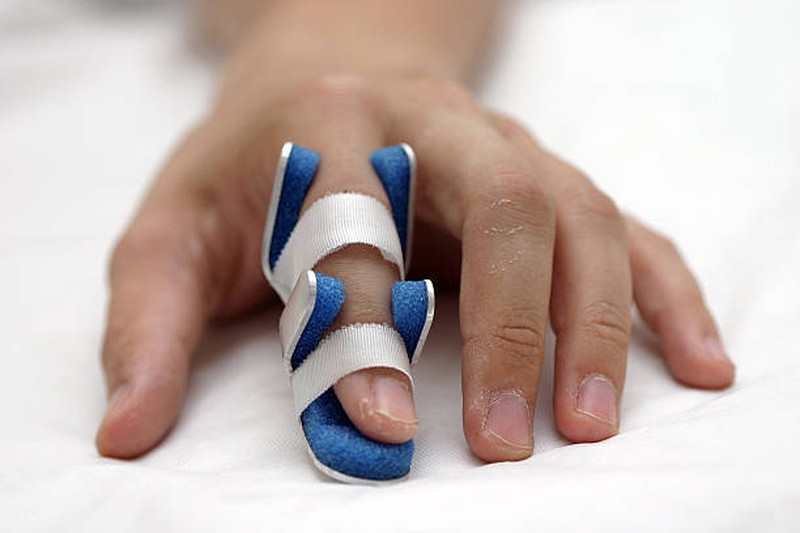

A finger splint is a medical device designed to support a finger, restrict unwanted movement or help hold a joint in a particular position. Depending on its design, it might be used alongside other approaches to manage an injured finger or a painful, stiff joint.
Different finger splints are designed for specific problems, including arthritis, trigger finger, mallet finger, hypermobility, swan neck and boutonniere deformities.
Finger Splints for Arthritis and Joint Support
Finger arthritis can cause pain, stiffness and swelling, making everyday tasks more difficult. A splint or finger brace can provide targeted support to an affected joint, helping to manage the demands placed on it during everyday activities.
Depending on the design, a splint might:
- Support an unstable joint
- Limit unwanted bending or straightening
- Provide additional stability during activities
- Help maintain a particular joint alignment
- Reduce movement around a painful joint
Osteoarthritis is one type of arthritis that can affect the fingers and hands, particularly the joints. Ring splints can also provide targeted support for individual joints while still allowing some movement.
Trigger Finger Splints for Finger Pain
Trigger finger affects the movement of a finger tendon and can cause clicking, catching or locking when bending or straightening the finger.
A trigger finger splint might be used to restrict certain movements and reduce movement around the affected area. The design depends on which part of the finger needs support.
If the finger repeatedly becomes stuck in a bent position or is difficult to straighten, a healthcare provider can advise whether splinting is appropriate.
Mallet Finger Splints for Finger Injuries
Mallet finger affects the tendon responsible for straightening the end joint of the finger. This can leave the fingertip bent and make active straightening difficult.
A mallet finger splint is designed to hold the affected joint in a straighter position. In some cases, splinting forms part of the management of the injury while the tendon recovers.
Other injuries can also require different types of support:
- Sprain: A ligament has been stretched or damaged and might require support while it recovers.
- Fracture: A broken bone might require immobilisation or other treatment depending on the injury.
- Tendon injury: Damage can affect the ability to bend or straighten the finger and might require specific positioning.
- Strain: A muscle or tendon has been overstretched or irritated and might benefit from appropriate support.
The appropriate approach depends on the type of injury and its severity. If there is significant pain and swelling following an injury, professional assessment can help determine the appropriate treatment.
Finger Splints for Boutonniere, Swan Neck and Crooked Finger
Some conditions change the position or movement of the finger joints and might require more specific support.
- Finger boutonniere: A splint can help keep the affected finger in a controlled position, particularly when straightening the middle joint is difficult.
- Finger swan neck: A ring splint can help limit excessive backward movement of the middle joint in some cases.
- Crooked finger: The right support depends on the underlying cause, such as injury, joint changes, or tendon problems.
- Finger hypermobility: A stabilising splint might help limit excessive joint movement while allowing useful hand function.
Although these conditions can affect how a finger looks, they involve different joints and movement patterns. The appropriate splint position depends on the specific problem rather than simply trying to straighten the finger.
Thumb and Wrist Support
Finger splints aren’t the only type of support used for the hand. Thumb splints or thumb braces can be used to provide support when thumb movement needs to be restricted, or a joint requires additional stability.
Some designs extend towards the wrist, particularly when support is needed around the base of the thumb.
A thumb splint might be considered for problems such as:
- Thumb arthritis
- Trigger thumb
- Thumb hypermobility
- Instability around the thumb joint
The appropriate design depends on the condition and the area requiring support.
Adjustable, Breathable and Waterproof Splint Features
Finger splints come in different sizes and materials, with features that can affect comfort and practicality when you wear the splint.
Depending on the design, you might find:
- Adjustable straps or fastenings
- Breathable materials to reduce heat and moisture
- Foam or other padding for cushioning
- Neoprene for flexible support
- Waterproof construction for use around water
- A pad, wrap or loop to help keep the splint in place
Some splints are available as one size, while others come in several sizes. A custom-fitted option might be considered when a more precise fit is needed.
How to Choose the Right Type of Finger Splint
The right type of splint depends on the condition, the affected joint and how much movement needs to be controlled.
Consider:
- Condition: Is the problem arthritis, trigger finger, mallet finger, hypermobility or an injury?
- Affected area: Which finger or joint needs support?
- Movement: Does the area need to be immobilised, stabilised or held in a particular position?
- Fit: Does the splint provide support without causing unnecessary pressure?
- Everyday use: Can you comfortably complete normal activities, including work or exercise, while wearing it?
If you’re unsure which design is appropriate, a healthcare professional or hand therapist can assess the problem and advise on suitable support. In some cases, physical therapy or specific exercises might also form part of the wider approach to managing a hand or finger problem.
When to Get Expert Advice
Some finger problems need professional assessment before using a splint.
Speak to a hand therapist or healthcare professional if you have:
- Severe pain, swelling or numbness
- A visibly crooked or deformed finger
- Difficulty moving or straightening the finger
- A suspected fracture or serious tendon injury
- Symptoms that aren’t improving
A local pharmacy might offer basic guidance on finger supports and medical equipment, but more complex injuries or persistent symptoms can require assessment from an appropriate healthcare professional.
They can assess the underlying problem and advise whether splinting is appropriate and what type of support might be suitable.